
Why Female Olympians Tear Their ACL More Often Than Men
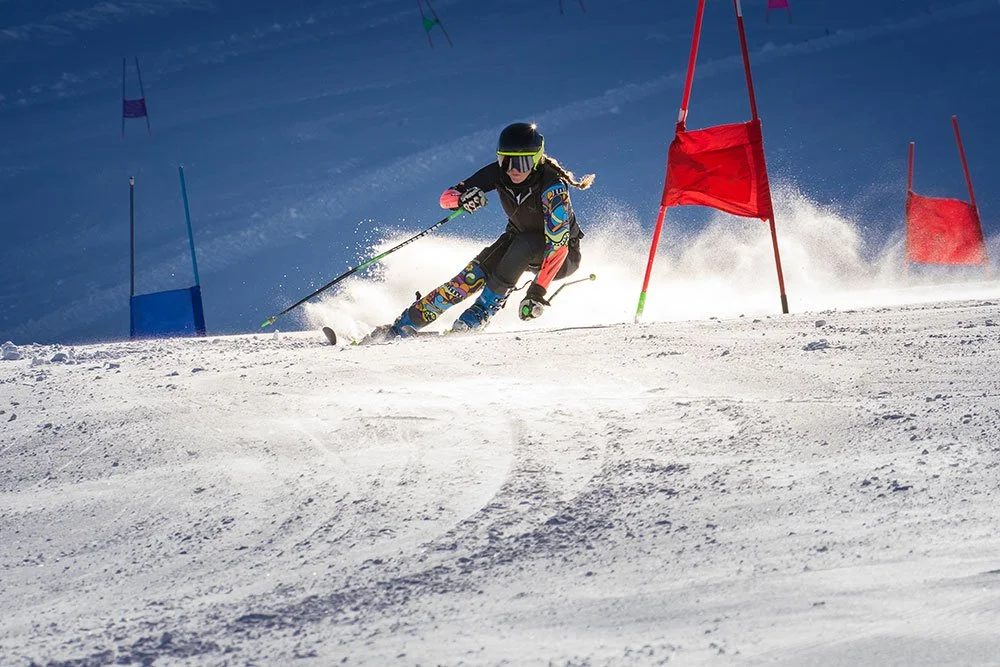
Elite skiing demands speed, strength, and precision. Yet across Olympic and World Cup competition, one pattern remains consistent: female athletes experience ACL injuries at significantly higher rates than their male counterparts. This trend is especially visible in alpine ski racing, where the knee is exposed to extreme forces at high speed.
Below, Dr. William Sterett, a former U.S. Ski Team physician and knee specialist at Vail-Summit Orthopaedics & Neurosurgery, explains why this happens and what athletes and recreational skiers alike should understand.
Key Takeaways
Female athletes experience higher ACL injury rates due to anatomy, biomechanics, and neuromuscular control.
Ski racing places unique rotational and valgus stress on the knee during high speed turns and landings.
A female ACL tear is often influenced by movement patterns rather than strength alone.
Torn ACL skiing injuries frequently occur without contact and during deceleration or edge catch moments.
Understanding ski racer ACL injury risk can help guide smarter training and prevention strategies.
Why Are ACL Injuries More Common in Female Ski Racers?
ACL injury risk is not about toughness or conditioning. It is largely about how the body moves under load.
“Female athletes tend to land and pivot differently than males,” explains Dr. Sterett. “That difference becomes critical in a sport like ski racing, where rotational forces are extreme and reaction time is minimal.”
A female ACL tear often occurs when the knee collapses inward while the athlete is decelerating or changing direction. This valgus position places enormous strain on the ACL, especially when combined with rotation.
Anatomy and Hormonal Factors Play a Role
Women typically have a wider pelvis, which increases the angle between the hip and knee. This alignment can alter how force is transmitted through the knee during aggressive skiing.
Hormonal fluctuations may also influence ligament laxity, particularly during certain phases of the menstrual cycle. While hormones alone do not cause injury, they can slightly reduce ligament stiffness at critical moments.
“These factors do not doom an athlete,” says Dr. Sterett. “But they do mean technique and neuromuscular control matter even more.”
Why Skiing Amplifies the Risk
Torn ACL skiing injuries are common because alpine skiing combines speed, edge control, and sudden load shifts. Unlike field sports, the skis lock the lower extremity into a fixed position while the upper body rotates independently.
A ski racer ACL injury often occurs when a skier loses edge grip, lands off balance, or attempts to recover from an unstable position at speed. The knee becomes the weak link.
“Ski racing does not give you time to think,” Dr. Sterett explains. “The body reacts instinctively, and if mechanics are off by even a small margin, the ACL pays the price.”
Neuromuscular Control Matters More Than Strength
Strength alone does not prevent injury. Many elite female athletes are incredibly strong, yet still experience ACL tears.
What separates lower risk athletes is how well their hips, core, and knees work together under fatigue.
“A female ACL tear is often a timing issue,” says Dr. Sterett. “The muscles do not fire quickly enough to protect the ligament when the load hits.” This is why prevention programs focused on landing mechanics, balance, and proprioception have shown measurable success.
What Can Be Done to Reduce Risk?
While no program eliminates injury risk entirely, targeted training can significantly reduce it.
Athletes who focus on hip strength, single leg control, trunk stability, and proper landing mechanics are better equipped to handle the demands of torn ACL skiing scenarios.
Understanding ski racer ACL injury patterns also helps coaches and athletes identify high risk moments and adjust training accordingly.
Final Thoughts from Dr. Sterett
“Skiing is one of the most demanding sports on the knee,” Dr. Sterett says. “Female athletes are incredibly strong, but they move differently biomechanically. When training is built around those realities, we can reduce injuries and keep athletes competing longer.”
Whether you are an Olympian or a recreational skier, recognizing how and why ACL injuries occur is the first step toward staying on snow longer and stronger. Contact us today!