
Why Female Athletes May Be More Vulnerable to Shoulder Instability
As Dr. William Sterett, a board-certified orthopedic surgeon and sports medicine specialist at Vail-Summit Orthopaedics & Neurosurgery, I frequently see female athletes who describe a shoulder that feels unreliable. Some report a sensation of slipping during exercise. Others notice recurring discomfort when reaching overhead, lifting weights, swimming, or participating in sports that demand repetitive arm motion.
While shoulder instability can affect anyone, women often face a unique combination of factors that can make maintaining shoulder stability more challenging.
The Shoulder Is Designed for Motion — Not Stability
Unlike the hip, which sits securely within a deep socket, the shoulder sacrifices stability to achieve an impressive range of motion.
This design allows athletes to throw, swim, climb, serve, and lift overhead. The tradeoff is that the shoulder relies heavily on soft tissues — including muscles, tendons, ligaments, and the labrum — to keep the joint centered and functioning properly.
When any part of that support system becomes overwhelmed, the shoulder can begin to feel unstable.
Why Joint Flexibility Can Be a Double-Edged Sword
Many female athletes naturally possess greater flexibility than their male counterparts.
In certain sports, flexibility is a tremendous advantage. Gymnasts, dancers, yogis, swimmers, and climbers often benefit from increased mobility. However, flexibility without adequate muscular control can create challenges around the shoulder.
I've treated many athletes who can easily move their joints beyond the normal range but struggle to maintain stability during demanding athletic movements.
In these situations, the shoulder may not necessarily be injured — it may simply be working harder than intended to stay in position.
Repetitive Overhead Sports Increase Demand on the Shoulder
Female athletes often participate in sports that place repeated stress on the shoulder complex.
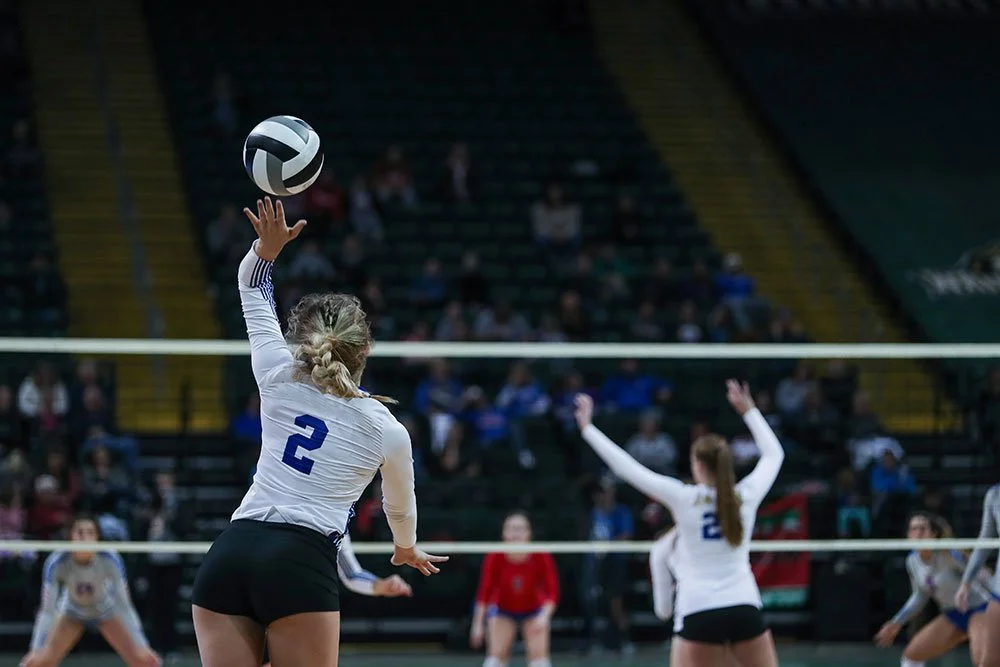
Volleyball players serve and spike hundreds of times each week. Swimmers complete thousands of overhead repetitions during training. Tennis players, softball players, and climbers all place significant demands on the structures responsible for stabilizing the shoulder.
Over time, these repetitive motions can lead to fatigue in the muscles that help center the joint. When those muscles become less effective, athletes may begin experiencing symptoms of instability.
Common warning signs include:
A feeling of looseness in the shoulder
Clicking or shifting sensations
Pain during overhead activity
Difficulty generating power
Fear that the shoulder might "give out"
Strength Matters More Than Most Athletes Realize
One of the biggest misconceptions I encounter is that shoulder stability comes primarily from the ligaments.
In reality, muscular control plays a tremendous role.
The rotator cuff and surrounding shoulder blade muscles act like a dynamic support system, helping keep the ball of the shoulder centered within the socket during movement.
When these muscles are properly conditioned, they can often compensate for natural ligament laxity and improve overall shoulder function.
That's why rehabilitation programs frequently focus less on flexibility and more on strength, coordination, and movement quality.
Early Symptoms Shouldn't Be Ignored
Many athletes dismiss mild instability because they can still compete.
Unfortunately, repeated episodes of slipping or shifting can place additional stress on the labrum and cartilage over time. What begins as occasional looseness can eventually progress into recurrent instability or more significant structural damage.
Seeking evaluation early often allows us to identify contributing factors and develop a treatment plan before the problem becomes more serious.
Keeping Female Athletes Strong and Active
The good news is that shoulder instability is highly treatable.
Many athletes improve through targeted strengthening programs, movement retraining, and sport-specific rehabilitation. When structural injuries are present, surgical stabilization may be considered to restore confidence and function.
I work closely with athletes to identify the underlying causes of instability and create individualized treatment plans based on their sport, goals, and anatomy.
If you're experiencing shoulder pain, recurrent instability, or a shoulder that simply doesn't feel trustworthy, schedule an evaluation with Dr. William Sterett. Understanding why your shoulder feels unstable is often the first step toward returning to the activities you enjoy with confidence.