
The Q Angle Myth: What Actually Increases ACL Injury Risk
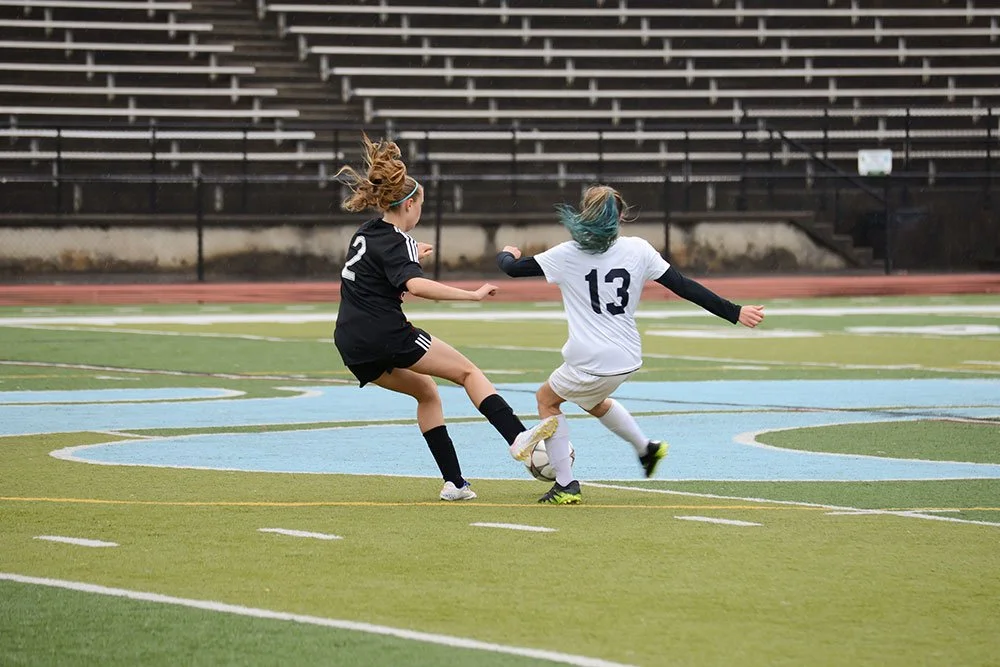
ACL injuries are among the most feared injuries in sports. When athletes tear their ACL, one explanation often appears quickly in conversations online and in locker rooms: the Q angle.
The theory suggests that a larger Q angle, often associated with female athletes, automatically increases the risk of ACL injury. But according to Dr. William Sterett, knee specialist at Vail-Summit Orthopaedics & Neurosurgery and former U.S. Ski Team physician, the relationship is far more complex.
In his experience evaluating thousands of athletes, the Q angle alone rarely tells the full story.
Before athletes focus on anatomy they cannot change, it is important to understand what actually contributes to ACL injury risk.
Key Takeaways
The Q angle alone is not a reliable predictor of ACL injury risk.
Neuromuscular control and landing mechanics play a much larger role.
Fatigue, reaction time, and poor movement patterns increase injury risk during sport.
Strength and coordination training can significantly reduce ACL injury risk.
Athletes concerned about injury risk can benefit from a detailed evaluation and second opinion.
What Is the Q Angle?
The Q angle, or quadriceps angle, measures the alignment between the hip, knee, and patellar tendon. It is often discussed when evaluating knee mechanics because it reflects how forces travel through the front of the knee.
Historically, a larger Q angle has been linked to a higher ACL injury rate, particularly in female athletes. This idea led many people to believe that anatomy alone determines injury risk.
But research and clinical experience tell a different story.
“The Q angle is just one small piece of a very complicated system,” Dr. Sterett explains. “It does not predict who will tear their ACL.”
Many athletes with larger Q angles never suffer ACL injuries. At the same time, athletes with perfectly normal alignment still tear their ACL every season.
The difference usually comes down to movement control.
The Real Risk Factor: How the Knee Moves Under Load
Most ACL injuries do not happen during contact. They occur when an athlete lands, cuts, or changes direction suddenly.
In those moments, the knee must absorb force while maintaining alignment. If the knee collapses inward or rotates excessively, the ACL can be placed under extreme stress.
“The biggest factor we see is poor neuromuscular control during high speed movements,” says Dr. Sterett. “It is not static alignment. It is how the body reacts under load.”
Athletes who allow their knee to fall inward during landing or cutting create a dangerous combination of valgus force and rotation. This movement pattern increases the strain placed on the ACL.
The Q angle does not cause this motion. Movement patterns do.
Why Fatigue and Reaction Time Matter
ACL injuries often occur late in games or training sessions. Fatigue plays a major role in how the body moves.
When muscles tire, coordination decreases. Reaction time slows. Athletes may land slightly off balance or lose control during a quick direction change.
In those moments, the stabilizing muscles around the knee may not respond quickly enough to protect the joint.
“Fatigue changes biomechanics,” Dr. Sterett explains. “Even strong athletes can lose control when they are tired.”
This is one reason neuromuscular training programs have become a major focus in ACL prevention.
The Role of Strength and Neuromuscular Training
Unlike anatomy, movement control can be trained and improved.
Programs that emphasize landing mechanics, balance, core strength, and hip stability have been shown to reduce ACL injury rates in many sports. Athletes who learn how to land with proper knee alignment and absorb force through their hips place less stress on the ACL.
Training also improves reaction time and coordination, which helps athletes maintain control during unpredictable game situations.
“Prevention programs work because they train the body to respond correctly during high speed movement,” Dr. Sterett says.
Instead of worrying about structural measurements like the Q angle, athletes often benefit more from focusing on movement quality.
When Athletes Should Seek an Evaluation
Athletes who feel unstable during cutting movements, experience repeated knee pain, or have suffered previous knee injuries should consider a professional evaluation.
In many cases, subtle biomechanical patterns can be identified and corrected before they lead to a serious injury.
Dr. Sterett regularly evaluates athletes who want to understand their injury risk or confirm a diagnosis before deciding on treatment.
Second opinions are especially helpful when athletes are facing major decisions about knee surgery, rehabilitation, or returning to sport.
Final Thoughts from Dr. Sterett
The Q angle has become a widely discussed concept in sports medicine, but it rarely determines whether an athlete tears their ACL.
What matters more is how the knee behaves during real world movement.
“ACL injuries are usually about dynamic control,” Dr. Sterett explains. “How the body moves during cutting, landing, and reacting under pressure.”
Athletes cannot change their anatomy, but they can improve strength, coordination, and movement mechanics.
If you are concerned about ACL injury risk, recovering from a knee injury, or considering surgery, a detailed evaluation can provide clarity. Dr. William Sterett offers expert guidance and second opinions to help athletes protect their knees and return to the sports they love.