
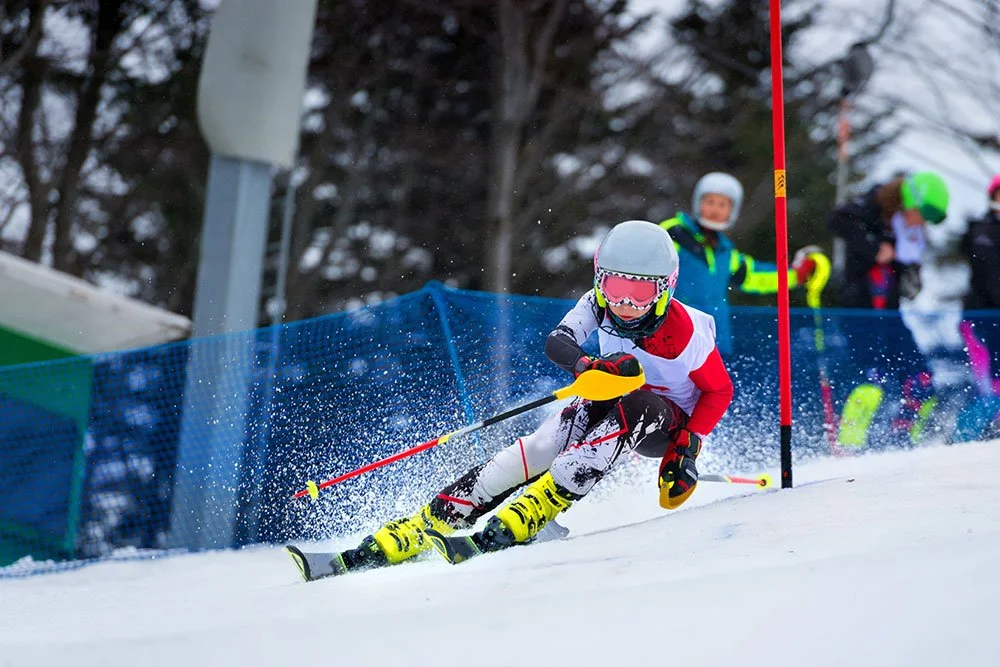
Why Young Ski Racers Face Different Knee Injury Risks Than Adults
As Dr. William Sterett, a board-certified orthopedic surgeon and sports medicine specialist, I frequently work with young athletes who spend much of their winter training and competing on the mountain.
One question I hear from parents is whether competitive ski racing places too much stress on a child's developing knees.
It's an important question, particularly in communities where children begin racing at an early age.
The answer isn't simply about how fast they're skiing.
It's about how their bodies are growing, how frequently they're training, and whether their muscles and joints are prepared for the demands of competition.
Understanding these differences can help parents recognize knee injuries in young skiers before a relatively minor problem becomes something more serious.
A Growing Knee Isn't Just a Smaller Adult Knee
Children and adolescents have an important anatomical difference that changes how their knees respond to injury.
Their bones are still growing.
Near the ends of their long bones are areas of developing cartilage called growth plates. These regions allow bones to lengthen as children mature, but they're also more vulnerable to certain types of stress and trauma.
In an adult, a twisting force might damage a ligament. In a younger athlete with open growth plates, a similar force can sometimes injure the developing bone instead.
This distinction matters when evaluating pediatric sports injuries, especially in activities involving high speeds, abrupt direction changes, and repetitive loading.
Ski racing combines all three.
Why Ski Racing Creates Unique Demands on the Knee
Recreational skiing and competitive ski racing may take place on the same mountain, but the physical demands can be very different.
Racers repeatedly drive their knees into deep flexion while maintaining pressure against their ski edges. They absorb forces through turns, react to changing terrain, and make rapid adjustments to stay on course.
Unlike recreational skiers, young racers may also spend several consecutive days training similar movements.
The concern isn't necessarily one individual turn.
It's the accumulation of stress over an entire season.
When training intensity increases faster than an athlete's strength, coordination, or recovery capacity, the knee may begin showing signs of overload.
This is one reason knee injuries in young skiers shouldn't automatically be attributed to a single fall or collision.
Sometimes, the problem develops gradually.
Growth Spurts Can Temporarily Change How Athletes Move
One of the more overlooked periods of injury vulnerability occurs during adolescence.
A young racer may return to the mountain after a summer growth spurt and discover that movements that once felt natural suddenly require more effort.
Their skis haven't changed.
Their technique may be nearly identical.
But their body proportions have.
As bones lengthen, muscles and tendons may temporarily feel tighter, while coordination and balance adjust to a changing center of gravity.
This can influence how an athlete absorbs force through the knees, particularly during aggressive turns or landings.
Rapid growth doesn't automatically cause an injury. However, it can create a period when training demands deserve closer attention.
For young racers, this is also when certain overuse conditions and growth plate injuries may become more concerning.
Not Every Knee Injury Involves the ACL
When people think about skiing-related knee injuries, they often think about ACL tears.
While ACL injuries are certainly a concern in competitive skiing, they aren't the only problems young athletes experience.
Depending on their age, skeletal maturity, and mechanism of injury, young racers may develop ligament sprains, meniscus injuries, kneecap-related pain, or irritation around the areas where tendons attach to developing bone.
Conditions such as Osgood-Schlatter disease can also cause pain below the kneecap during periods of rapid growth and repetitive activity.
Importantly, Osgood-Schlatter disease is not the same as an acute growth plate fracture.
Some growth plate injuries occur after a specific traumatic event, while others involve repetitive stress to developing structures.
Determining which tissue is actually injured is essential because treatment recommendations can differ significantly.
When Is Knee Pain More Than Normal Training Soreness?
Young athletes are often highly motivated to continue competing.
They may minimize discomfort because they don't want to miss a race, disappoint their teammates, or interrupt their training schedule.
But pain shouldn't automatically be considered a normal part of competitive skiing.
I encourage parents and coaches to pay attention when a young athlete experiences:
Knee pain that consistently returns during training
Swelling following skiing or racing
Limping or difficulty bearing weight
Pain concentrated around a specific area of bone
A knee that catches, locks, or feels unstable
Discomfort that continues despite rest
These symptoms don't necessarily indicate a serious injury.
However, persistent or worsening pain deserves evaluation, particularly in a growing athlete.
Identifying pediatric sports injuries early can help prevent athletes from repeatedly stressing an area that needs time to recover.
Should Young Ski Racers Train Differently Than Adults?
Young athletes can benefit tremendously from competitive skiing.
The sport develops strength, coordination, discipline, and confidence. The goal isn't to discourage participation, but to recognize that training should evolve alongside physical development.
Strengthening the hips, quadriceps, hamstrings, and core can help improve control through demanding turns.
Equally important are appropriate recovery periods, varied training activities, and adjustments during rapid growth.
Parents and coaches should also recognize that an athlete's chronological age doesn't always reflect their physical maturity.
Two racers who are both 13 years old may be at very different stages of skeletal development.
That difference can influence how they tolerate training and recover from injury.
Reducing training loads when pain develops and allowing adequate recovery are important parts of preventing knee injuries in young skiers.
Helping Young Ski Racers Stay on the Mountain
Competitive skiing is an incredible opportunity for young athletes growing up in Colorado's mountain communities.
It also places unique demands on bodies that are still developing.
Understanding those demands, recognizing the warning signs of pediatric sports injuries, and adjusting training during periods of rapid growth can help young racers build a strong foundation for years of skiing.
If your child is experiencing persistent knee pain during training or competition, don't assume it's simply part of growing up or racing hard.
An accurate diagnosis can help protect their developing knees while giving them the best opportunity to return to the sport they love.