
Why a Broken Collarbone Doesn't Always Require Surgery
As Dr. William Sterett, a board-certified orthopedic surgeon and sports medicine specialist, I regularly see young athletes who have sustained shoulder injuries while skiing.
One injury that can be particularly concerning for parents is a fractured clavicle, commonly known as a broken collarbone.
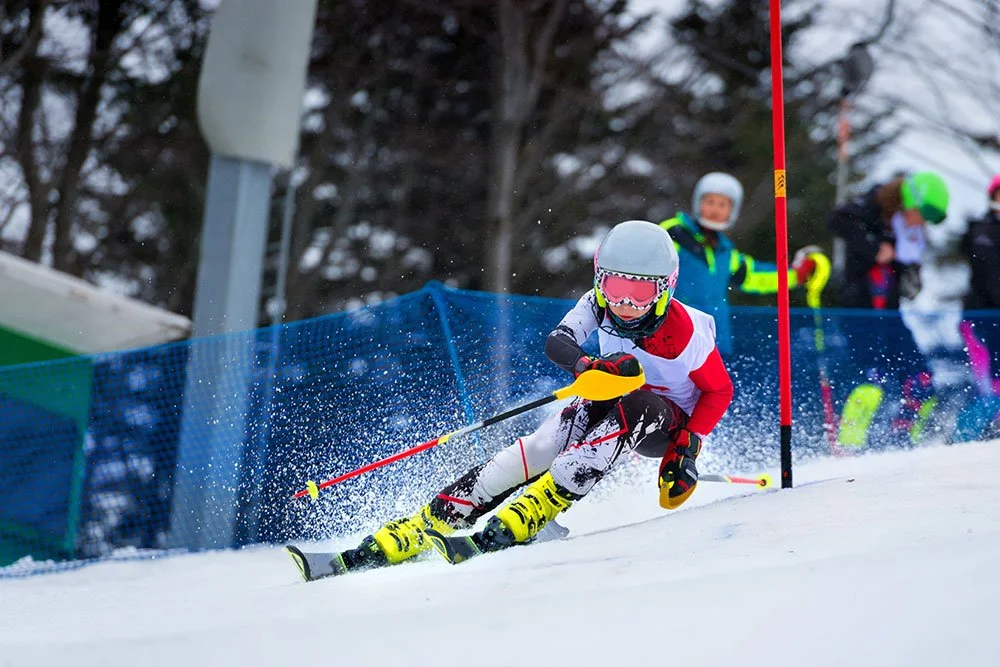
For competitive ski racers, these injuries often happen suddenly. A racer catches an edge, loses control through a gate, or lands directly on their shoulder after a high-speed fall.
The pain can be immediate, and the appearance of the injury can be alarming.
But here's something that often surprises families.
Even when the bone is visibly displaced, surgery isn't always necessary.
Understanding how a clavicle fracture skiing injury affects a growing athlete can help parents make informed decisions about treatment and recovery.
Why the Collarbone Is Vulnerable During Ski Racing
The clavicle connects the shoulder to the chest and helps position the arm for movement.
Although it's a relatively small bone, it plays an important role in shoulder stability and function.
During a skiing accident, a racer may land directly on the outside of their shoulder. The impact transfers force through the shoulder girdle and into the collarbone.
If that force exceeds what the bone can tolerate, a fracture occurs.
Unlike many knee injuries in skiing, clavicle fractures generally result from direct impact rather than repetitive stress.
For a broken collarbone teenager diagnosis, the circumstances of the fall are important, but they don't tell us everything about the severity of the fracture.
The location of the break, the position of the bone fragments, and the athlete's skeletal maturity all influence treatment decisions.
When Can a Clavicle Fracture Heal Without Surgery?
For many young ski racers, nonsurgical treatment is the preferred starting point.
This typically involves wearing a sling to support the arm while the fracture begins healing.
As discomfort improves, gentle shoulder movement can gradually be introduced under medical guidance.
The process requires patience.
Even when an athlete begins feeling better, the bone may not yet be strong enough to tolerate another fall.
For a competitive racer, this can be frustrating. They may regain comfortable shoulder motion well before they're ready to return to gates, high speeds, or unpredictable terrain.
A clavicle fracture skiing injury should be considered healed enough for racing based on clinical recovery and evidence of bone healing, not simply the absence of pain.
Returning too early increases the risk of another injury before the fracture has fully consolidated.
When Does Surgery Become the Better Option?
Not every clavicle fracture can be managed safely with a sling.
Certain injuries require surgical evaluation, and a smaller percentage of young athletes may benefit from an operation.
Surgery is more likely to be considered when:
The fractured bone has broken through the skin or threatens to do so
The injury affects nearby nerves or blood vessels
The fracture is associated with significant additional shoulder injuries
The bone fails to heal appropriately
An older adolescent has a severely displaced or shortened fracture that warrants individualized discussion
One important distinction is that displacement alone doesn't automatically mean surgery is necessary.
Research involving adolescents has shown that many completely displaced midshaft clavicle fractures still heal well without an operation.
The decision becomes more individualized as athletes approach adulthood, particularly when fracture alignment is poor.
When discussing pediatric clavicle surgery, I believe it's important to consider both the potential benefits of fixation and the risks of an operation.
Surgery may improve alignment and provide mechanical stability, but it also introduces risks such as infection, numbness, hardware irritation, and the possibility of another procedure to remove the implants.
The goal isn't simply to make the X-ray look better.
It's to achieve reliable healing and restore long-term shoulder function.
Does Being a Competitive Ski Racer Change the Decision?
This is a question I think deserves particular attention.
A young athlete who races competitively may have very different goals than someone who participates in recreational sports.
They may be concerned about missing an important race series, losing training time, or returning to competition before the season ends.
Those concerns are understandable.
However, being a competitive athlete doesn't automatically make surgery the best choice.
For a broken collarbone teenager injury, the decision should prioritize the fracture's healing potential and the athlete's long-term shoulder health.
Although surgical fixation may be appropriate in selected cases, it doesn't guarantee a faster or safer return to racing.
The potential consequences of another high-speed fall also need to be considered.
What Does Recovery Look Like for Young Ski Racers?
Recovery varies depending on the athlete's age, fracture pattern, and treatment.
Many younger patients heal relatively quickly, while older adolescents with more significant fractures may require additional time.
The first stage focuses on protecting the fracture and controlling discomfort.
As healing progresses, shoulder mobility becomes the priority, followed by strengthening and gradually restoring normal function.
Returning to ski racing requires more than being able to lift the arm overhead.
Athletes need sufficient strength, comfortable motion, and a healed fracture capable of tolerating the forces associated with a potential fall.
A return to racing often takes several months, although the timeline varies.
Following a clavicle fracture skiing accident, I encourage families to think about recovery in terms of readiness rather than a specific race date.
A missed competition is disappointing.
A second injury to a healing collarbone can create a much longer setback.
Why an Individualized Treatment Plan Matters
One of the challenges with clavicle fractures is that two injuries can look similar initially but have very different treatment considerations.
A younger child with substantial growth remaining may heal successfully despite significant displacement.
An older teenager with a complex fracture may require a more detailed discussion about surgical and nonsurgical options.
For families considering pediatric clavicle surgery, understanding those differences is essential.
A thorough evaluation helps determine whether the fracture is likely to heal reliably on its own or whether surgical fixation offers a meaningful advantage.
Getting Young Ski Racers Back to Competition
Ski racing is demanding, and falls are an unavoidable part of the sport.
Fortunately, most clavicle fractures in children and adolescents heal successfully, and many young athletes return to skiing without lasting limitations.
The important thing is choosing treatment based on the injury rather than the pressure to return to competition.
If your child has sustained a broken collarbone teenager injury during training or racing, an orthopedic evaluation can help clarify the severity of the fracture and the safest path forward.
Whether treatment involves a sling or surgery, the ultimate goal is the same: a strong, functional shoulder that allows your young athlete to return to the mountain with confidence.