
My Child Says Their Knee Hurts, But They Can Still Play. Should They?
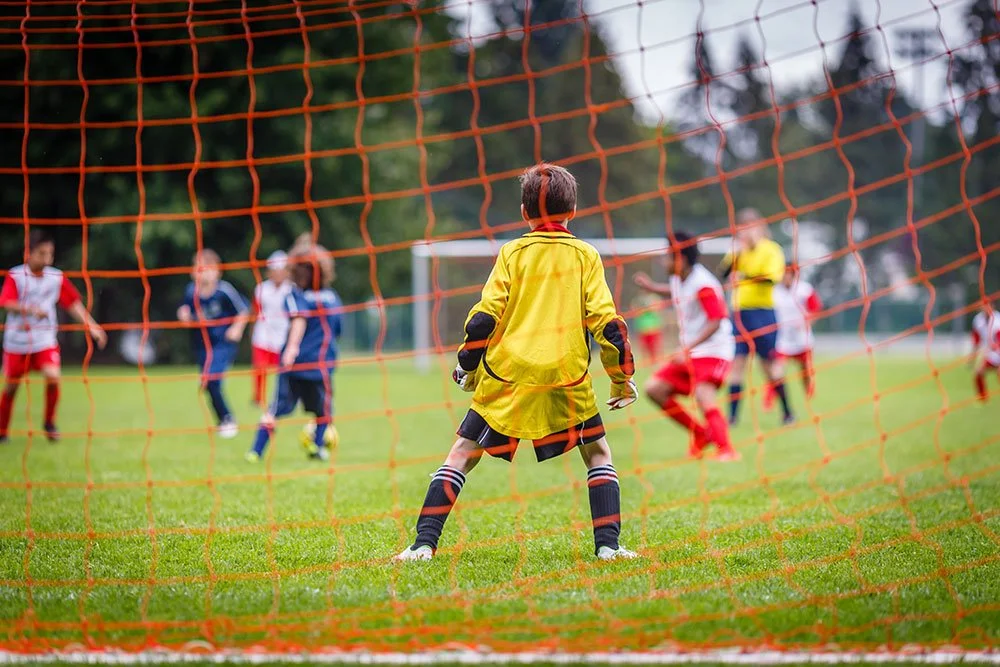
One of the most common conversations I have with parents doesn't begin with a dramatic injury.
It usually starts with a sentence like this:
"They've been complaining about their knee for a week, but they're still playing."
That's exactly what makes these injuries difficult.
Many of the knee problems I see in young athletes don't happen because of one bad tackle, awkward landing, or collision. Instead, they build gradually. The athlete finishes practice. They play the weekend tournament. They score goals or run a personal best. From the outside, everything looks fine.
But underneath the surface, the knee is telling a different story.
Kids Don't Always Limp When Something Is Wrong
Adults often expect an injured athlete to limp, sit out, or be unable to finish a game.
Young athletes are different.
They compensate remarkably well. They'll change how they jump. They'll land on the opposite leg. They'll avoid fully bending the knee without even realizing they're doing it.
By the time parents notice something looks "off," the problem has often been developing for weeks.
That's why I pay just as much attention to how an athlete moves as where they say it hurts.
Performance Often Changes Before Pain Does
One clue parents frequently overlook is a change in performance.
Maybe your soccer player suddenly doesn't want to strike the ball with their dominant foot.
Maybe your volleyball player isn't jumping as high.
Maybe your cross-country runner starts fading late in races despite being in great shape.
Young athletes don't always describe pain well. Sometimes they simply play differently.
When confidence disappears, I start asking why.
"It's Probably Just Growing Pains"
Growing athletes absolutely experience aches and soreness.
But true growing pains generally occur in both legs, often at night, and aren't isolated to one knee after every practice.
Pain that returns every time an athlete runs, cuts, jumps, squats, or goes downstairs deserves a closer look.
I tell parents not to focus on how severe the pain is.
Instead, ask:
Is it happening more often?
Is it lasting longer after activity?
Is it changing how they move?
Is it preventing them from giving full effort?
Those answers usually tell me much more than a pain scale.
The Earlier We Identify the Cause, the Easier It Is to Treat
Many youth knee injuries begin as relatively minor problems, irritated cartilage, tendon overload, inflammation around the kneecap, or stress on the growth plate.
Left alone, those same issues can become much harder to manage.
The goal isn't to keep kids out of sports.
It's to keep a small problem from becoming the reason they miss half the season.
Parents Know Their Kids Better Than Anyone
If your child says something "just doesn't feel right," listen.
You don't have to assume the worst. Most young athletes don't need surgery.
But they also shouldn't have to play through pain simply because they can.
An early evaluation can often provide reassurance, identify the true source of symptoms, and get young athletes back to doing what they love before a manageable problem becomes a bigger one.