
How to Avoid Shoulder Injuries This Winter
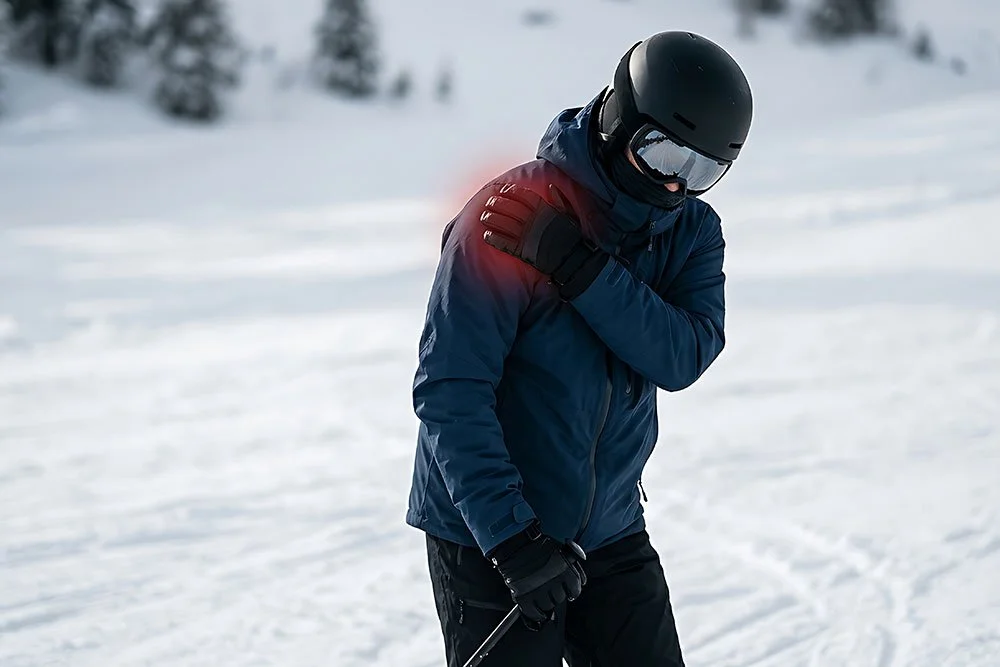
The Most Common Shoulder Injuries Don't Always Happen on the Slopes
As Dr. William Sterett, a board-certified orthopedic surgeon and sports medicine specialist at Vail-Summit Orthopaedics & Neurosurgery, I spend every winter treating patients with shoulder injuries. Many assume they were hurt skiing or snowboarding at high speed.
Surprisingly, that's not always the case.
Some of the most significant shoulder injuries happen in the parking lot, on an icy sidewalk, or while carrying skis across a slippery surface.
Winter creates more opportunities to fall, and how you land can make all the difference.
Your Natural Instinct Can Work Against You
When people begin to slip, almost everyone reacts the same way.
They throw an arm out to catch themselves.
It's an instinctive response, but it's also one of the fastest ways to injure the shoulder.
Trying to stop your entire body weight with an outstretched arm places tremendous force through the shoulder joint. Depending on how you fall, that force can lead to shoulder dislocations, rotator cuff tears, collarbone fractures, or AC joint injuries.
The shoulder is designed for mobility, not for absorbing the impact of a fall.
Skiing and Snowboarding Create Different Injury Patterns
Not every winter sport stresses the shoulder in the same way.
Skiers often injure their shoulders after catching an edge or falling with an arm extended while holding ski poles. Falls can also occur when attempting to brace against the snow during a sudden stop.
Snowboarders, meanwhile, frequently fall directly onto their shoulder or wrist because both feet remain attached to the board. Beginners are especially prone to this type of fall as they learn balance and edge control.
In both sports, fatigue plays a role. Late in the day, reaction times slow, muscles become tired, and falls become more common.
You Can't Prevent Every Fall, But You Can Fall Smarter
No one plans to fall.
However, learning how to fall can reduce the likelihood of a serious shoulder injury.
Rather than reaching straight out with your hand, try to keep your arms closer to your body whenever possible. Allow your body to roll with the fall instead of attempting to stop all of your momentum with a single arm.
Snow conditions, speed, and terrain all influence what happens next, so there isn't one perfect technique for every situation. But avoiding a stiff, outstretched arm is one of the simplest ways to decrease stress on the shoulder.
Just as importantly, know when to call it a day. Many injuries happen during "one last run," when fatigue begins to affect balance, coordination, and judgment.
Not Every Shoulder Injury Feels Severe Right Away
One misconception I hear frequently is, "I figured it was just bruised."
Sometimes that's true.
Other times, patients continue skiing for several runs before realizing they can no longer comfortably lift their arm.
Persistent pain, weakness, limited motion, or the feeling that the shoulder isn't functioning normally may indicate more than a simple strain.
The severity of the injury isn't always determined by how much it hurts in the first few minutes.
When Should You Be Evaluated?
If shoulder pain improves over a day or two and your motion quickly returns, the injury may simply need time to settle down.
However, I recommend seeking an evaluation if you notice:
Difficulty lifting your arm overhead
Significant weakness
A visible deformity around the shoulder or collarbone
A shoulder that feels unstable or has dislocated
Pain that continues to interfere with daily activities after several days
Swelling or bruising that continues to worsen
A careful examination can often determine whether you've sustained a simple sprain, a rotator cuff injury, a fracture, or another condition that requires treatment.
Enjoy Winter, Safely
Colorado winters offer incredible opportunities to ski, snowboard, snowshoe, and enjoy the outdoors. My goal isn't to discourage those activities—it's to help you enjoy them safely.
Most shoulder injuries happen unexpectedly, but understanding how falls occur and recognizing when symptoms deserve attention can help you avoid a small injury becoming a much larger one.
If you've taken a fall this winter and your shoulder still doesn't feel right, don't assume it will simply work itself out. An accurate diagnosis is often the first step toward getting back on the mountain with confidence.